Lost Filling or Crown Ottawa
BluSky Dental Richardson

If a filling or crown comes out, avoid chewing on the affected tooth and contact the dental team. Even without pain, the exposed area may need protection and assessment.
Keep a recovered crown or large piece in a container and bring it to BluSky Dental Richardson. The dentist can decide whether it can be reused or whether a different repair is needed.
What to Do First
Call (613) 829-5921 and describe what came out, whether the tooth is painful and when it happened. Mention recent treatment if the restoration was placed recently.
Do not use household glue or force a crown into place. A restoration that sits incorrectly can affect the bite or come loose again. Avoid leaving a loose piece in the mouth where it could be swallowed or inhaled.
If there is choking, breathing difficulty or concern that a piece has been inhaled, seek urgent medical care.
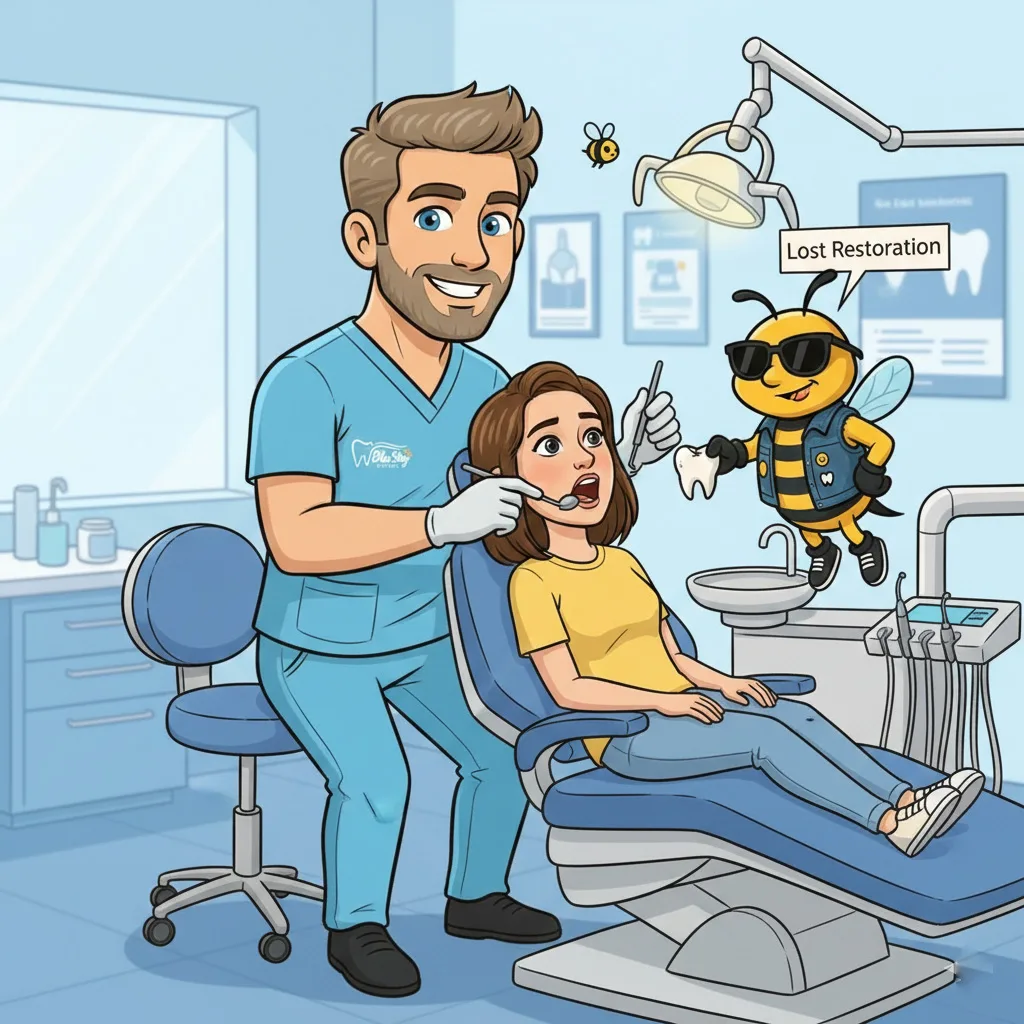
Assessing a Lost Filling or Crown in Ottawa
The dentist checks the remaining tooth and the restoration. Loss of cement, damage, decay or a fracture can affect the next step, and a photograph cannot reliably distinguish them all.
Tell the clinician whether the tooth was already sensitive, food was catching or the crown had felt loose. Those details can help explain why it came off.
An intact-looking crown does not prove the underlying tooth is sound. Equally, a lost crown does not automatically mean the tooth needs extraction.
Can the Crown Be Put Back?
If the crown and tooth are suitable, recementing may be possible. The fit, seal and reason for the loss need checking first.
If decay, a fracture or a damaged restoration is present, the plan may involve repair, a new restoration or other treatment. A lost filling is assessed in the same way: the remaining structure determines the repair.
See dental crowns and fillings for the treatment options. Larger structural loss may call for a different design rather than simply replacing what was there before.
Temporary Care Is Not the Finish
The urgent visit may protect the tooth while a definitive restoration is arranged. Ask what the temporary material can tolerate and when to return.
Report a temporary repair that loosens or leaves the bite feeling high. Do not keep using the tooth normally just because the sharpness or sensitivity has settled.
Follow the cleaning instructions around the exposed or temporarily repaired area. Avoid sharp tools that could damage the tooth or gum.
If Pain or Swelling Develops
Contact the clinic promptly for increasing pain, swelling, fever or a bad taste. Breathing or swallowing problems or rapidly spreading swelling needs emergency medical care.
Pain relief can support comfort while arranging care, but it does not establish that the tooth is safe to leave untreated. Ask a pharmacist or clinician if you are unsure which product suits your health and medicines.
Prevent a Repeat Where Possible
Once the cause is known, discuss any changes needed in cleaning, bite protection or restoration design. Some failures relate to the tooth rather than the age of the crown alone.
Contact Richardson to arrange the assessment, and bring the recovered restoration if you have it.
Talk with the Richardson team
Tell us what you would like help with and ask about your next visit.
Call: (613) 829-5921
Address: 510 Richardson Ave, Ottawa, ON K2B 5H1