
Periodontitis Ottawa
BluSky Dental Richardson

Periodontitis affects the tissues and bone supporting teeth. It can progress with little pain, so an assessment of gum support is important even when the mouth feels reasonably comfortable.
At BluSky Dental Richardson, the examination helps establish the extent of the disease and the care needed to control it. The aim is to maintain teeth where possible and make daily cleaning and ongoing review effective.
How Periodontitis Differs from Gingivitis
Gingivitis involves inflammation of the gums without the supporting attachment and bone loss that define periodontitis. Redness or bleeding alone cannot tell you which condition is present.
With periodontitis, changes may include deeper spaces around teeth, recession, bleeding, persistent bad breath or mobility. These signs need assessment rather than self-staging from an online chart.
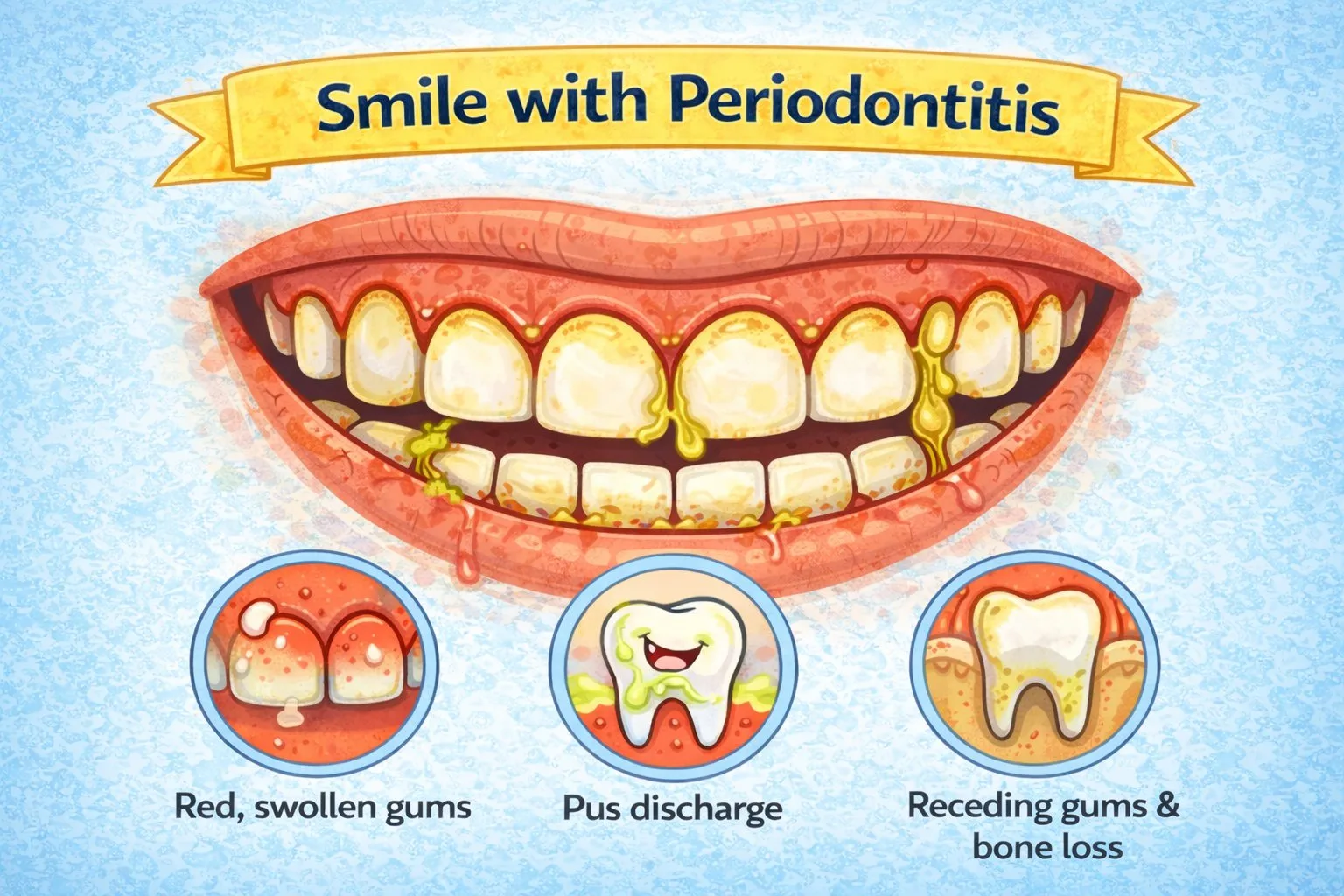
Periodontitis Assessment in Ottawa
The clinician measures around the teeth, checks bleeding and tissue levels, and considers relevant imaging and health history. The findings establish the pattern and severity, rather than relying on one pocket-depth number alone.
Tell the team about smoking, diabetes, medicines and previous gum treatment. Earlier records can help show whether support has changed over time.
Ask which teeth are most affected and how the prognosis differs across the mouth. Advanced disease does not mean that every tooth has the same outlook.
Treatment and Reassessment
Initial treatment commonly involves improving plaque control and professional cleaning of affected root surfaces. The response is then reviewed so persistent areas can be identified.
Some patients need further procedures or a periodontist's assessment. Surgery is not automatic for every deep measurement, and a routine cleaning is not always sufficient for established disease.
The plan should explain what each stage is intended to achieve and how success will be assessed. If a tooth has a poor prognosis, discuss the options and consequences before deciding on removal.
What Can Be Restored?
Controlling inflammation and reducing ongoing damage are key goals. Lost support does not simply return through brushing or a standard cleaning.
Selected defects may be considered for regenerative procedures after assessment. These are specific treatment decisions, not a promise to regrow all lost bone or reset the mouth to an earlier state.
Daily Care and Maintenance
Cleaning between teeth and around the gumline needs to suit your anatomy. Ask for a practical demonstration and explain any barriers, including sensitivity or limited dexterity.
Periodontal maintenance is planned according to risk and response. It includes monitoring as well as cleaning. There is no one recall interval that fits every person with periodontitis.
If bleeding, mobility or a bad taste returns, report the change. Symptoms settling does not mean long-term review is no longer needed.
Questions About the Treatment Plan
The extent of disease, the areas needing care and your ability to manage appointments affect the sequence. Reassessment after initial treatment is a separate step from simply repeating the same cleaning.
No single symptom settles that decision. The amount of support, inflammation, function and response to treatment help determine whether a tooth can be maintained and with what prognosis.
Your maintenance schedule should reflect the periodontal diagnosis and continuing risk. Ask who will monitor the condition and how general dental care and periodontal care will be coordinated.
Show the team where the difficulty occurs. A different tool, technique or treatment of a contributing problem may help. Avoid leaving the area untouched because the first method was uncomfortable.
The clinician compares symptoms and examination findings over time. Feeling comfortable is useful, but ongoing measurements provide information you cannot assess at home.
Keep Health Factors in View
Manage diabetes with your medical team and discuss support for stopping smoking if relevant. These factors can influence the response to periodontal care.
Book a Richardson assessment to understand the current support around your teeth and develop a plan for maintaining it.
Talk with the Richardson team
Tell us what you would like help with and ask about your next visit.
Call: (613) 829-5921
Address: 510 Richardson Ave, Ottawa, ON K2B 5H1