Dentures in Ottawa

BluSky Dental Richardson

BluSky Bee

Replacing missing teeth should help you manage everyday activities, from eating a meal to speaking comfortably. Dentures are removable replacements made around the teeth and tissues you have. A useful plan considers fit, appearance, cleaning and how you will adapt to wearing them.

Choosing dentures in Ottawa

The first distinction is whether you need to replace some teeth or all the teeth in an arch. An arch means the upper or lower set. Your gum health, remaining teeth, bite and ability to handle a removable appliance all influence the recommendation.

At BluSky Richardson, explain what is difficult with your current teeth or denture. A concern about movement while eating needs a different discussion from a broken tooth on an otherwise comfortable appliance.

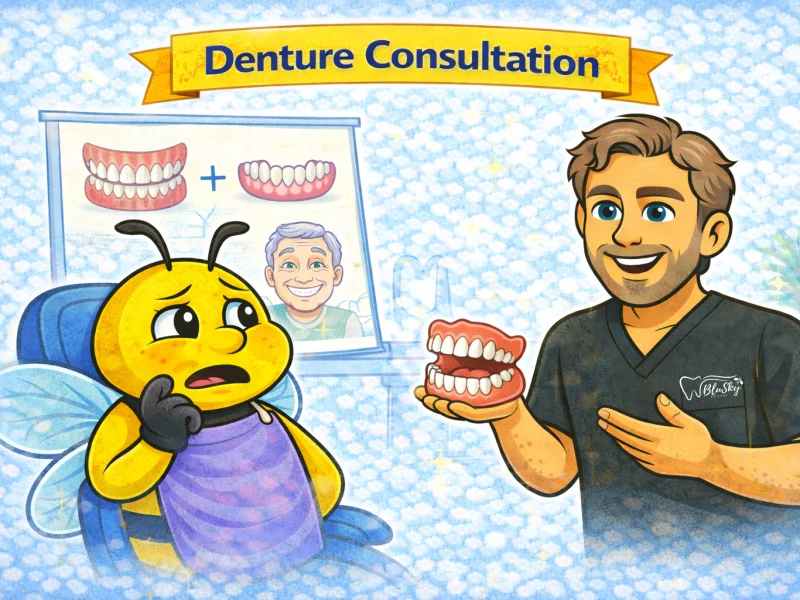
BluSky illustration of discussing denture options

The main options

Partial dentures

A partial denture replaces selected missing teeth while other natural teeth remain. Its design may use clasps or other attachments for support. The condition and position of the remaining teeth matter, as does access for daily cleaning.

Complete dentures

A complete denture replaces the teeth in one arch and rests on the supporting tissues. Shape, saliva, muscle control and the fit of the base affect how it feels. Upper and lower dentures do not necessarily have the same stability.

Immediate dentures

Some treatment plans provide a denture at the time teeth are removed. This helps manage the transition, but healing changes the tissues underneath. Adjustments, relining or later replacement may be part of the plan and should be discussed in the estimate.

Implant-retained removable dentures

Implants may provide attachments that help hold a removable denture. You still take it out for care as instructed. This differs from a fixed implant bridge, which is not removed by you at home. Surgery, bone assessment and attachment maintenance add to the considerations.

What happens during planning and fitting?

The clinician examines your mouth and discusses the teeth, tissues and any appliance already present. Impressions or scans, bite records and shade or shape choices help develop the replacement. Depending on the design, trial stages may allow checks before it is finished.

At delivery, the fit and bite are assessed and you learn how to insert, remove and clean the denture. New pressure points can become apparent as you use it. Follow-up adjustments are part of establishing comfort; you should not have to file or reshape the appliance yourself.


Getting used to a denture

Speaking and eating may feel different at first. Start with manageable foods and follow the advice given for your specific appliance. Practice can help, but repeated pain or a denture that keeps lifting should be reviewed rather than simply endured.

Sore areas, difficulty chewing and changes in fit can also develop in an older denture. The tissues underneath change over time. Adding more adhesive is not a substitute for checking whether the fit needs correction.

Daily care and ongoing checks

Clean the denture with products suitable for its materials. Handle it over a protected surface so an accidental drop is less likely to break it. Avoid hot water that could distort the appliance, and follow the instructions for storage when it is out of your mouth.

Clean your gums and any natural teeth as well. A removable replacement does not remove the need for oral examinations. Reviews allow the clinician to check tissue health, remaining teeth, bite and fit.

Questions about this treatment

Follow your provider's instructions. Dentures are generally removed overnight to give tissues a rest, but the immediate period after extractions may involve specific directions.

Sometimes. Bring all broken pieces and avoid household glues. The clinician needs to check why it broke and whether repair, relining or replacement is appropriate.

Ask about the appliance, preparatory treatment, adjustments, future relines and any implant attachments. Our dentures versus implants guide helps compare the wider commitments.

Book a Visit to talk about a replacement that fits your daily life.

Talk with the Richardson team

Tell us what you would like help with and ask about your next visit.

Call: (613) 829-5921

Address: 510 Richardson Ave, Ottawa, ON K2B 5H1