
Inlays and Onlays Ottawa
BluSky Dental Richardson

A damaged back tooth does not always need the same type of repair. An inlay or onlay replaces part of the tooth with a restoration made to fit the prepared area.
At BluSky Dental Richardson, the remaining tooth structure guides the decision. The goal is enough support for the repair while avoiding unnecessary removal of healthy tissue.
How Inlays and Onlays Differ
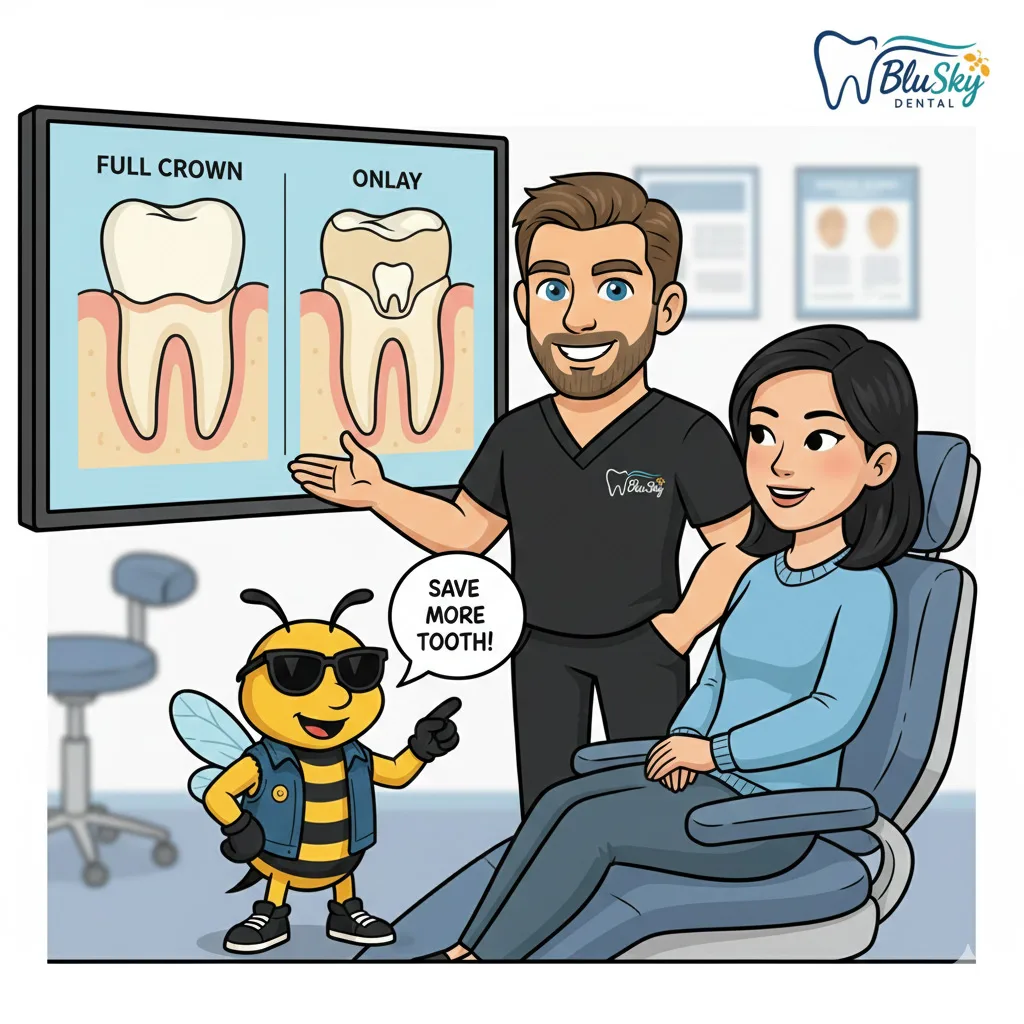
An inlay fits within the chewing surface without covering the main biting points, called cusps. An onlay extends over one or more cusps when those areas need protection or rebuilding.
Both are partial-coverage restorations. A crown covers the tooth more extensively, while a direct filling is shaped in the tooth during the appointment. These descriptions explain coverage; they do not establish which option is right before examination.
Considering Inlays and Onlays in Ottawa
The dentist assesses the size of the damaged area, the strength of the cusps and any existing filling or crack. The position of the tooth and chewing forces help determine the design.
A restoration that works well for one large cavity may not suit a different tooth with less sound structure. Ask why the proposed coverage matches your findings and whether an alternative is reasonable.
Our fillings page and crowns page explain those alternatives without treating them as automatic steps on a price ladder.
Material and Appearance
Material choice takes account of the design, available space, bite and cosmetic priorities. Tooth-coloured materials can be considered where suitable, but appearance is only one part of the selection.
Tell the dentist if you grind, clench or have broken restorations before. Those details may affect the preparation and protection of the repaired tooth.
Ask what can be repaired if the restoration is damaged later. Different materials and designs have different limitations.
The Treatment Stages
The tooth is prepared and a record of its shape is taken so the restoration can be made. Depending on the workflow, a temporary restoration may protect the area between appointments.
At fitting, the clinician checks the restoration's seating, contacts and bite before it is secured. The number of visits depends on the plan; a digital method does not automatically establish same-day completion.
If you have a temporary restoration, follow its eating and cleaning instructions and report looseness or damage. Its role is to protect the prepared tooth until the planned next stage.
Care After Fitting
Clean around the restoration and between teeth daily. The remaining tooth can still develop decay, particularly near restoration edges. Mention persistent sensitivity or a bite that feels uneven after treatment.
Regular review checks the tooth and the restoration together. An inlay or onlay does not have a guaranteed lifetime or a fixed replacement date.
Questions About the Preparation
It may be an option when a filling needs replacement, but the decision follows an assessment of the tooth underneath. A sound filling does not need to be changed simply because another material is available.
The final amount of useful structure can become clearer during preparation. Ask beforehand which findings could change the recommendation to a different restoration and how the updated plan would be discussed.
Compare the Complete Plan
Ask what the estimate includes, whether a temporary restoration is expected and what happens if more damage is found during preparation. Consider the outlook for the tooth as well as the initial fee.
Arrange a Richardson assessment to understand how much coverage your tooth needs and why.
Talk with the Richardson team
Tell us what you would like help with and ask about your next visit.
Call: (613) 829-5921
Address: 510 Richardson Ave, Ottawa, ON K2B 5H1