
Root Canal Treatment Ottawa
BluSky Dental Richardson

Root canal treatment addresses inflamed or infected tissue inside a tooth so the tooth can be retained when it is suitable for restoration. It is a treatment for a diagnosed problem, not something every toothache requires.
At BluSky Dental Richardson, the first step is finding the cause of your symptoms and the outlook for the tooth. You should understand both the internal treatment and the repair needed afterward.
When Root Canal Treatment Is Considered
The pulp inside a tooth contains nerves and blood vessels. Deep decay, an injury, a crack or problems around earlier dental work can affect this tissue.
Symptoms may include lingering temperature pain, discomfort on biting or swelling, but they are not specific enough to diagnose the problem alone. Some teeth needing treatment have little pain. Examination, tests and relevant imaging guide the recommendation.
Read about toothache if you are arranging an assessment, and call promptly for pain accompanied by swelling or fever.
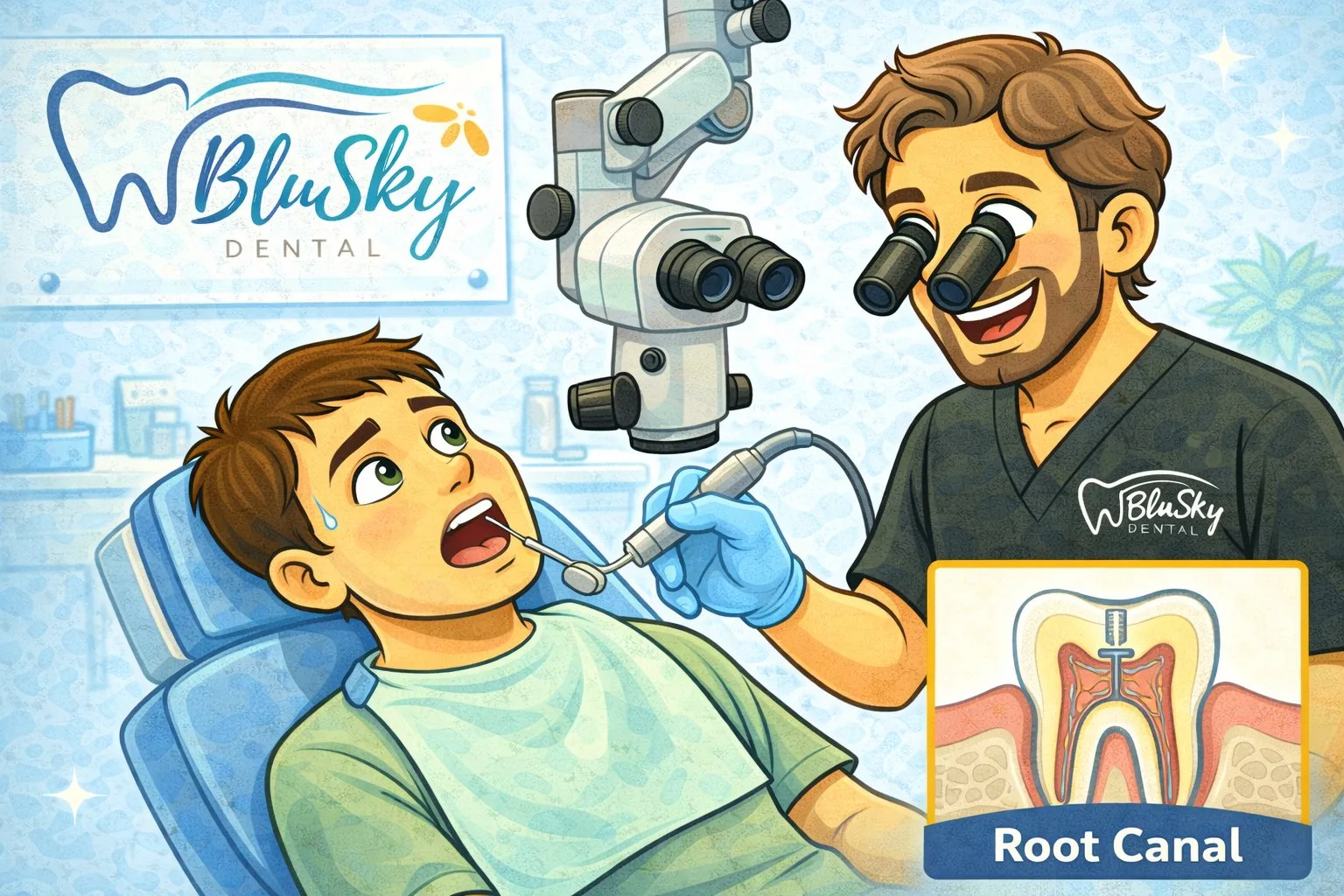
Planning Root Canal Treatment in Ottawa
The dentist also checks whether enough tooth remains to support a restoration. Treating the canals has limited value if the tooth cannot be predictably rebuilt or has an unfavourable fracture.
Ask about the prognosis, the alternatives and whether an endodontist's assessment is appropriate. Extraction is an alternative in some circumstances, but its consequences and any replacement plan need consideration too.
What Treatment Does
The internal tissue is removed, and the canal spaces are cleaned, shaped and sealed. The tooth is then protected with an appropriate restoration. The number of visits depends on the diagnosis and complexity.
Local anaesthetic and other comfort measures are discussed for your situation. Tell the clinician about previous difficulty getting numb or anxiety. A promise that every patient will feel nothing is not a substitute for checking your comfort during care.
Our appointment guide explains preparation and follow-up in more detail.
Finish the Restoration
A root-treated tooth still needs a sound seal and enough support for its chewing load. The final repair may involve a crown or another restoration, depending on the remaining tooth.
If a temporary filling is placed, follow its restrictions and arrange the next stage. Do not assume the tooth is ready for unrestricted chewing simply because the pain has improved.
Long-Term Care
The remaining tooth can still decay, and supporting tissues still need daily cleaning. Keep the recommended review so healing and the restoration can be checked.
New pain, swelling or a loose restoration deserves assessment. Some teeth need further endodontic treatment or another approach later; retaining a tooth cannot be guaranteed for a fixed number of years.
If a Previously Treated Tooth Hurts
A tooth that has already had root canal treatment can still develop a problem. New decay, a damaged restoration or a fracture are among the possibilities that need assessment.
Do not assume another root canal or extraction is inevitable. The dentist needs to establish the cause and whether further endodontic care, restoration or another approach is appropriate. Bring records of the earlier treatment if available, and describe when the new symptoms began.
Discuss Your Options
Ask whether the estimate includes both canal treatment and the definitive restoration, and clarify any referral fees. Book a Visit at Richardson to understand the diagnosis before choosing the next step.
Talk with the Richardson team
Tell us what you would like help with and ask about your next visit.
Call: (613) 829-5921
Address: 510 Richardson Ave, Ottawa, ON K2B 5H1