
Dry Mouth Ottawa
BluSky Dental Richardson

A dry mouth can make eating, speaking and wearing dentures uncomfortable. If you regularly need water to swallow dry food or your mouth feels sticky through the day, it is worth discussing rather than accepting as inevitable.
At BluSky Dental Richardson, we look at the mouth and the history behind the change. The aim is to improve comfort while protecting teeth and tissues that depend on saliva.
What Saliva Does
Saliva lubricates the mouth, helps with chewing and swallowing, and contributes to protecting teeth. Reduced saliva can increase the risk of decay and oral infection.
Feeling dry and producing too little saliva are related but not identical findings. The assessment needs to consider symptoms, medications, health and what is seen in the mouth.
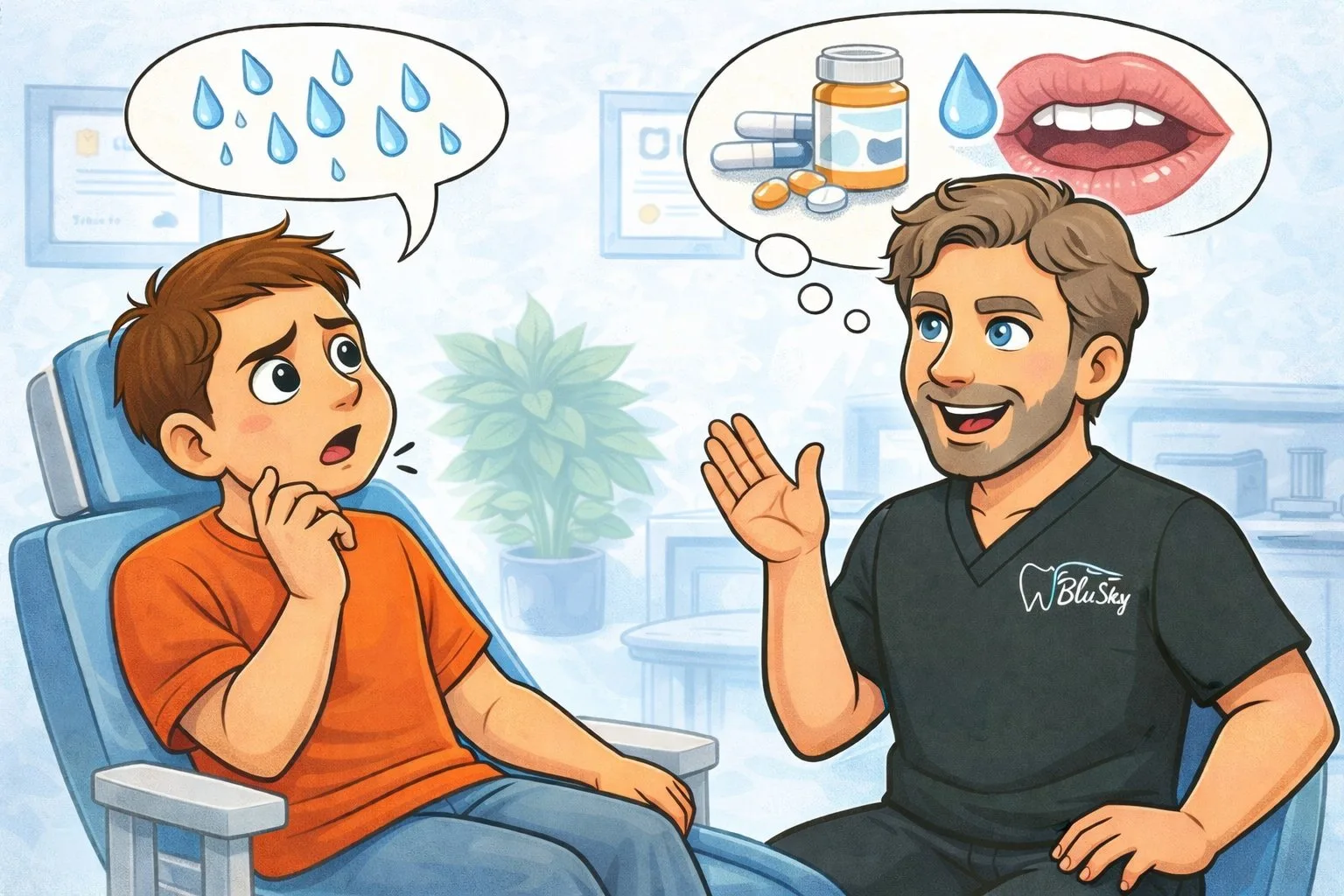
Discuss Dry Mouth in Ottawa
Tell the dentist when dryness started, whether it is worse at night and how it affects eating or sleep. Mention a burning sensation, altered taste, sores or problems with a denture.
Bring all prescribed medicines, over-the-counter products and supplements on your list. Many medicines can contribute to dryness. Certain medical conditions and treatments can also affect saliva.
Do not stop a prescription on your own. If medicine appears relevant, the prescribing clinician can consider whether an adjustment is appropriate.
Assessment Beyond Drinking More Water
Water can help comfort, but persistent dryness may need investigation. The dentist checks oral tissues, teeth and appliances, and may recommend medical assessment if a wider cause is suspected.
Tell the team about dry eyes or other symptoms as well as mouth breathing and recent treatment. Those details help determine which provider should investigate further.
Ask what has been established and whether additional assessment is needed before assuming a single explanation.
Protecting Your Teeth
When saliva is reduced, a more focused decay-prevention plan may be needed. The discussion can include fluoride products, cleaning methods and a review interval based on your risk.
Frequent sugary sweets or acidic drinks used to relieve dryness can create another problem for teeth. Ask about alternatives that improve comfort without adding repeated sugar or acid exposure.
Existing restorations and exposed roots need attention too. A crown or filling does not make the remaining tooth immune to decay.
Measures That May Improve Comfort
Small sips of water can help, unless a medical provider has restricted fluids. Sugar-free gum or lozenges may encourage saliva when chewing and swallowing are safe for you.
Saliva substitutes or moisturising products can be considered for symptom relief. Ask which type suits your needs and whether a product's ingredients could irritate your mouth.
Keep dentures clean and have sore areas assessed. Avoid using an ill-fitting appliance as a reason to tolerate an ulcer or difficulty eating.
When to Seek Further Advice
Arrange assessment for persistent sores, recurrent infection or difficulty eating and drinking. Significant swallowing difficulty, dehydration or feeling acutely unwell needs prompt medical attention.
If a recommended product does not help, tell the team. The next step may be a different approach or further investigation rather than simply using more of it.
Review the Plan
Ask how comfort and dental risk will be monitored. Keep the medical and dental teams informed of relevant changes so advice remains consistent.
Contact Richardson to discuss ongoing dryness and the protection your mouth needs.
Talk with the Richardson team
Tell us what you would like help with and ask about your next visit.
Call: (613) 829-5921
Address: 510 Richardson Ave, Ottawa, ON K2B 5H1