Tooth Decay Ottawa
BluSky Dental Richardson

If new cavities keep appearing, repairing each one is only part of the answer. Tooth decay reflects the balance between repeated acid exposure, the protection in your mouth and the care your teeth receive.
At BluSky Dental Richardson, we can look at that pattern with you. The aim is to identify changes that reduce further damage while treating any areas that already need repair.
How Tooth Decay Develops
Plaque bacteria use sugars and produce acids that remove minerals from tooth surfaces. Saliva and fluoride help counter that process. When damaging episodes repeatedly outweigh protection, the surface can break down into a cavity.
This process can affect adults and children, including exposed root surfaces. It is not always visible or painful in its early stages.
Early mineral loss and a tooth with missing structure are different situations. Prevention may help manage the first; the second may also require a restoration.
Assessing Tooth Decay in Ottawa
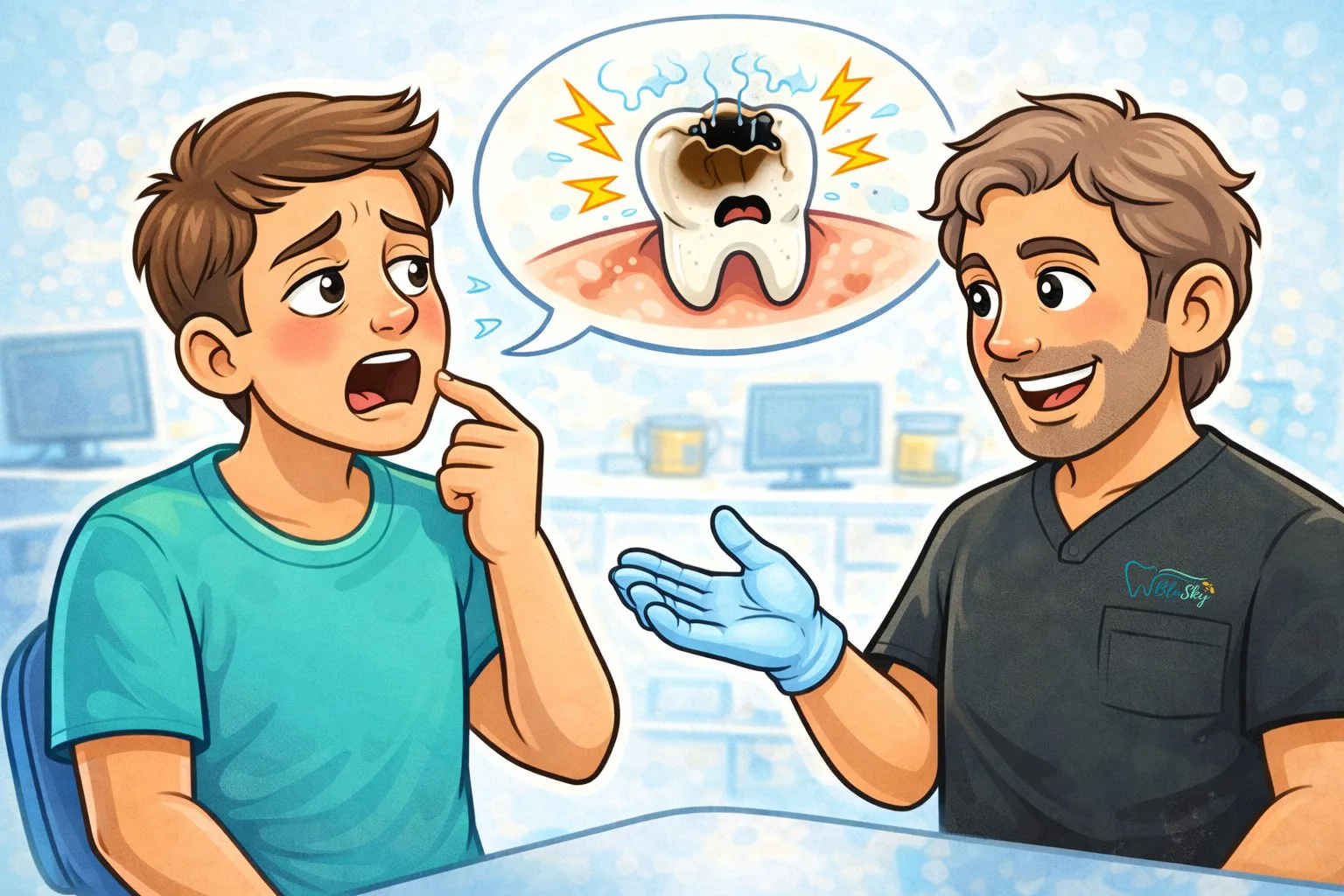
The dentist looks for current lesions and considers your history of new cavities, existing restorations and relevant imaging. The pattern across the mouth can be as useful as one isolated tooth.
Tell the team about changes in health, medicines or daily routine. If decay increased after a period of dryness or a change in eating patterns, that history helps focus the prevention plan.
For the assessment of a particular hole or damaged area, see dental cavities.
Look at Frequency, Not Just Quantity
Repeated sipping of sweetened drinks or frequent snacks can expose teeth many times during the day. Even a modest amount consumed continuously can create a different pattern from having it with a meal.
Discuss what happens on a typical workday rather than an ideal one. If you rely on snacks because of medical needs or nausea, the plan should account for that instead of ignoring it.
Water is a useful everyday drink for many people. Ask about other practical substitutions that suit your health and routine.
Saliva and Medication Matter
Dry mouth can reduce the protection available to teeth. Medicines, medical conditions and some treatments may contribute.
Do not stop prescribed medicine to protect your teeth. The dental team can discuss prevention and coordinate with the prescriber when a medication review is appropriate.
Tell the dentist if you use sweets, lozenges or drinks repeatedly to relieve dryness. Their ingredients and frequency may be part of the decay pattern.
Make Cleaning Effective
Brush with fluoride toothpaste and clean between teeth using a suitable method. Areas around braces, bridgework or difficult tooth positions may need a demonstration and a different tool.
If a routine is not working, explain what gets in the way. Limited hand movement, bleeding or sensitivity needs a practical response rather than a more complicated list you cannot follow.
Professional fluoride treatment or sealants may be appropriate for selected risks and tooth surfaces. Neither means the daily routine can be abandoned.
Repair and Prevention Work Together
A filling, onlay or crown addresses a damaged tooth, but nearby tooth structure remains vulnerable. Continued decay around an old restoration may require a new assessment of both the repair and the wider risk.
Ask which areas need treatment now, which can be monitored and what changes should reduce future damage. If monitoring is recommended, make the review date and criteria clear.
Check Whether the Plan Is Helping
At follow-up, discuss new lesions, changes in symptoms and how manageable the prevention routine has been. The plan may need adjusting as health or circumstances change.
You do not need to solve everything before the next visit. Book a Richardson appointment to identify the highest-priority changes and make prevention more specific to your mouth.
Talk with the Richardson team
Tell us what you would like help with and ask about your next visit.
Call: (613) 829-5921
Address: 510 Richardson Ave, Ottawa, ON K2B 5H1