
Dental Care Tips for Seniors
BluSky Dental Richardson

A useful dental routine should fit your hands, comfort and daily life. If brushing, eating or caring for a denture has become harder, there may be a practical adjustment that helps. Getting older does not mean that pain, persistent dryness or loose teeth should simply be accepted.
Dental care tips for seniors at home
Keep the cleaning tools you use regularly easy to reach and comfortable to handle. If gripping a small brush is difficult, ask about an adapted handle or a powered option. A tool only helps if you can position it effectively around the teeth and gums.
Tell the hygienist which task is hardest. It may be reaching behind the last tooth, threading under a bridge or cleaning between close contacts. A demonstration with your own mouth and appliance can turn a general instruction into something usable.
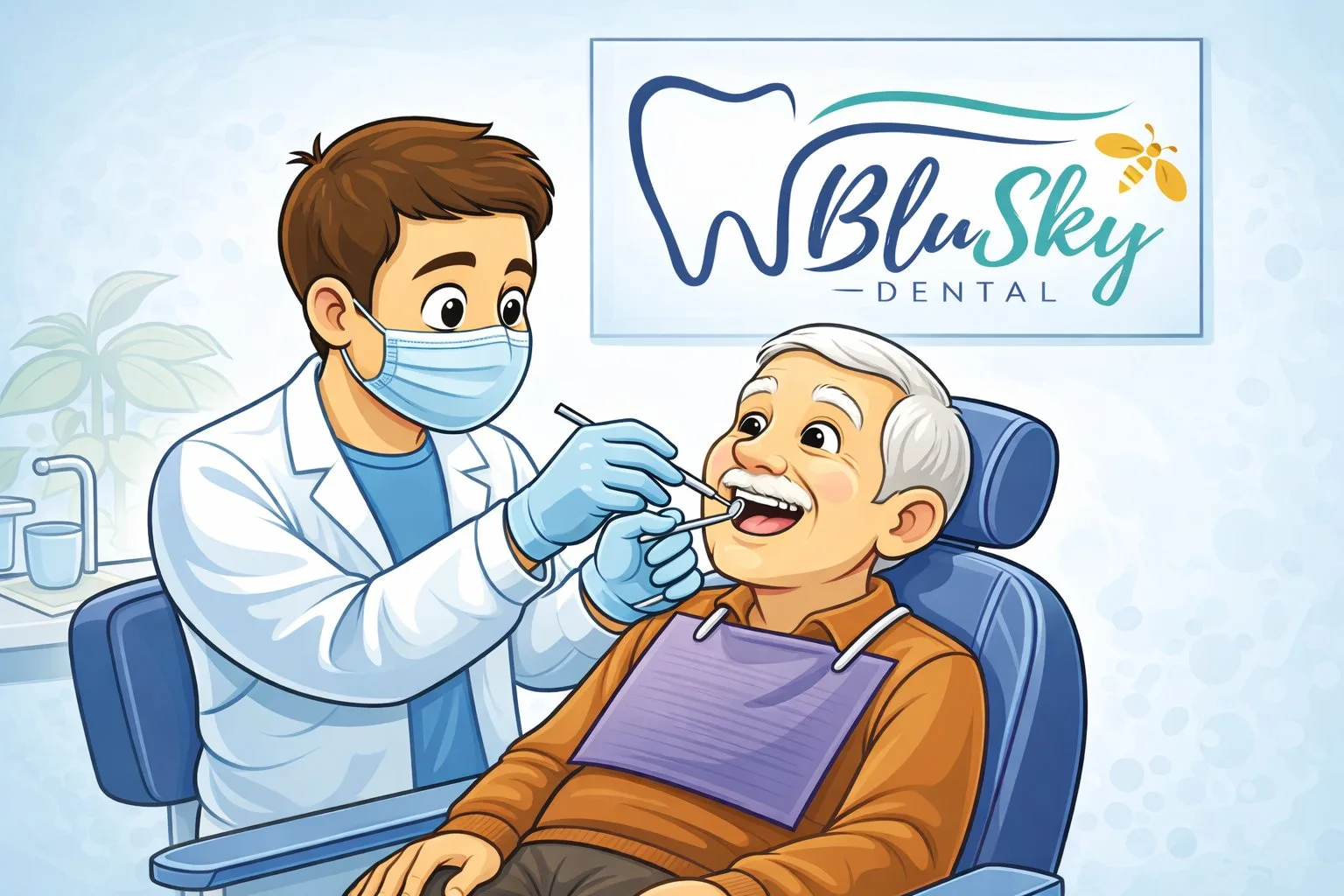
Review persistent dry mouth
Dryness can affect chewing, speaking, comfort and dental risk. It is not simply a normal part of ageing. Medicines and health conditions may contribute, so bring an up-to-date medicine list and explain when the problem occurs.
Do not stop a prescription on your own. Your dentist may suggest preventive measures and ways to ease symptoms, and coordination with the prescribing clinician may help when a medicine is involved.
Repeatedly sucking sweets to relieve dryness can create another problem for teeth. Discuss what you are using and ask for an approach that fits your health and swallowing needs.
Look after the teeth you have
Natural teeth with fillings or crowns still need cleaning. Recession can expose root surfaces, and old restorations need review for their condition rather than replacement solely because of age.
Report food trapping, a changed bite or a place you have begun to avoid when chewing. These practical changes can reveal a problem worth assessing even when you would not describe it as severe pain.
Keep recommended review visits, and ask for the reason behind the interval. Your oral health and ability to maintain the routine matter more than a standard schedule assigned to everyone over a certain age.
Care for dentures and the tissues underneath
Clean a removable denture using products suitable for the material. Handle it over a protected surface and avoid hot water that could distort it. Follow your provider's instructions about removal and storage, including any special directions after recent extractions.
The mouth still needs examination when no natural teeth remain. A sore spot, lump or persistent colour change should be assessed. Do not keep adding adhesive or reshaping the denture yourself to deal with a problem that has not been examined.
If the denture is difficult to insert, remove or clean, ask for a review of the design and technique. The best replacement is one you can use and maintain reliably.
When someone helps with daily care
A caregiver can support the routine while respecting the person's preferences and independence. Agree on what help is wanted and ask the dental team to demonstrate safe, practical assistance. Do not assume that another person's appliance or cleaning method is appropriate.
Explain changes in eating, cooperation or mouth comfort to the clinician. Someone who has difficulty describing pain may show it through altered behaviour or avoiding a food. The cause needs assessment rather than an assumption that the person is simply being difficult.
Prepare one useful question for the visit
Bring the tool, appliance or instruction that is causing trouble. You might ask for a simpler way to clean a bridge or an explanation of why a denture now moves. Specific examples make it easier to identify a workable change.
If care is shared between home, family and another support setting, keep the instructions consistent. Ask who will notice changes and contact the dental team when needed. A short, clear routine can reduce confusion without turning everyday care into an unnecessarily complicated task for the person receiving it.
Read about senior dentistry for treatment planning, or contact Richardson to discuss help with your routine.
Talk with the Richardson team
Tell us what you would like help with and ask about your next visit.
Call: (613) 829-5921
Address: 510 Richardson Ave, Ottawa, ON K2B 5H1