Position before final shape
Moving teeth may reduce the amount of restorative work needed or change the space available for it. If orthodontics is part of the plan, the relationship with later restorations and retention needs to be clear.
BluSky Dental Richardson

When more than one aspect of your smile bothers you, a coordinated plan can help avoid making decisions one tooth at a time. A smile makeover brings selected treatments together around your goals, while considering oral health, function and the care the finished work will need.
Begin by describing what you would like to change and what you like already. You may want a brighter colour, more even edges or a solution for spaces. You may also prefer a subtle result that keeps the character of your smile.
At BluSky Richardson, those preferences are discussed alongside the clinical findings. A makeover is not a standard package or a fixed number of veneers. The useful plan is specific to your teeth and the priorities you choose.
Decay, gum inflammation, unstable restorations or a bite problem may need attention before cosmetic work. Otherwise, an appearance change could be built around a condition that later disrupts it.
The assessment should separate necessary treatment from optional cosmetic steps. You should be able to understand which recommendation protects health or function and which is intended mainly to change appearance.
Moving teeth may reduce the amount of restorative work needed or change the space available for it. If orthodontics is part of the plan, the relationship with later restorations and retention needs to be clear.
Natural teeth and dental materials do not whiten in the same way. If whitening is appropriate, its timing should be coordinated before selecting the shade of new composite or ceramic work.
Where gum treatment or contouring is involved, healing can affect the visible margin. The clinician plans the sequence so later restorations relate to a suitable, stable tissue condition.
The finished work should be comfortable to use and possible to clean. A pleasing photograph is only one part of the result. Ask how chewing, speech and maintenance will be assessed.
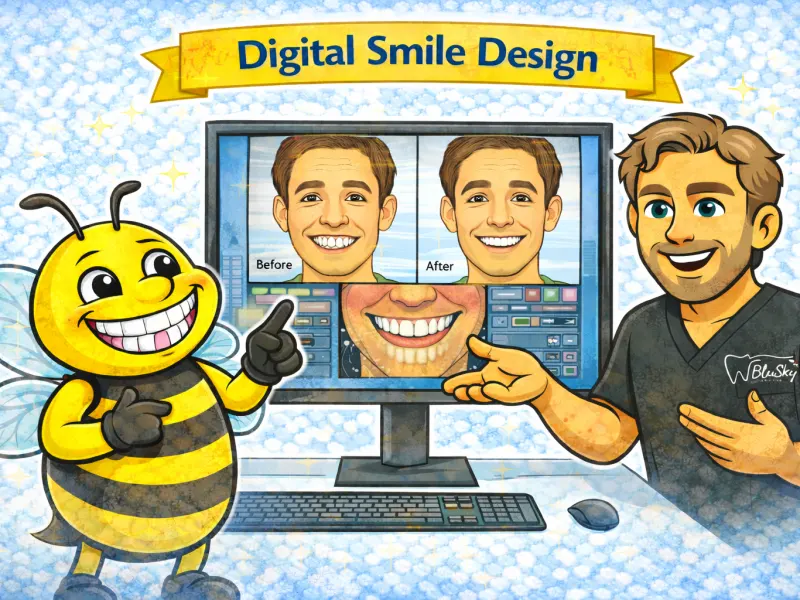
Photographs, models or digital smile design may help explain the proposal. Some cases allow a mock-up or provisional stage. These tools support communication, but their availability and predictive limits should be clear.
Use the preview discussion to describe details rather than simply approving a whole image. Talk about length, brightness, shape and any features that feel unlike you. Ask which choices remain adjustable and when preparation would make a decision harder to reverse.
You may prefer to address the most noticeable concern first or spread treatment around work and budget. Ask which stages can stand alone and which depend on earlier steps. A sequence should not leave you with an unfinished condition you did not expect.
If an event is part of your motivation, mention the date early. Some changes require healing or a longer treatment period. The plan should explain what is realistic without guaranteeing completion to meet an arbitrary deadline.
A broad proposal can be easier to understand when it is compared with a smaller option. Ask what would change if you treated only the feature that bothers you most. Would the result be visually balanced? Would a later stage require replacing work already completed? Which parts of the plan are necessary for the others to function?
For example, a colour change and a single shape correction may address your priorities without restoring several healthy teeth. In another case, a limited repair might not sit comfortably within a worn or unstable bite. The examination helps establish which comparison is reasonable.
You should also understand the option of leaving a healthy area alone. Choosing a cosmetic improvement is personal. The fact that a change is possible does not mean it is required for oral health or that a larger plan is automatically more worthwhile.
For a multi-step plan, ask for the intended order in writing. Identify the appointment that completes each stage and any decision that depends on the response to earlier treatment. This helps you distinguish a planned review from an unexpected extra visit.
If temporary restorations are involved, clarify what they are intended to test or protect. Ask how to care for them, what limitations they have and whom to contact if they break. A provisional stage is not necessarily a preview of every quality of the final material.
When different providers are involved, make sure the design and clinical information are shared with your authorization. Your preferred appearance, the bite requirements and the restoration margins need to stay connected across the plan.
Once treatment is fitted, mention anything that feels awkward when you speak, chew or clean. A detail that looks good in a close-up image still needs to work in everyday use. The clinician can determine whether an adjustment or further review is needed.
Keep the agreed maintenance visits and ask how to protect the specific materials used. If a small chip or colour concern develops later, have it assessed before deciding that the whole makeover must be replaced. A targeted repair may be possible depending on the finding.
Planning for those ordinary future decisions makes the initial choice more realistic and easier to compare with a smaller treatment plan.
Composite and ceramic work can need polishing, repair or replacement. Orthodontic changes need retention. Teeth and gums continue to change over time, so maintenance belongs in the plan from the beginning.
Compare estimates that identify each treatment and its purpose. Clarify records, temporary stages, review visits and any items not included. Cosmetic benefits should be checked with your insurer rather than assumed from a general dental coverage percentage.
No. A discussion may show that one limited change is enough. The label makeover should not create pressure to do more work.
No. Extensive rehabilitation focuses on restoring compromised function and structure across the mouth. Cosmetic goals can overlap, but the diagnosis and treatment reasons must remain clear.
Yes. Your preferences help define the goal. There is no obligation to pursue a uniform or unusually bright appearance.
Book a Visit to explore a coordinated plan, or start with the cosmetic dentistry overview.
Tell us what you would like help with and ask about your next visit.
Call: (613) 829-5921
Address: 510 Richardson Ave, Ottawa, ON K2B 5H1