Cracked Tooth Ottawa
BluSky Dental Richardson

A tooth can be cracked without a piece breaking away. You may notice a sharp sensation when biting, pain as pressure releases or sensitivity that comes and goes. Those symptoms need investigation because several conditions can feel similar.
At BluSky Dental Richardson, describe the pattern rather than trying to prove the crack yourself. Avoid repeatedly biting a hard object to recreate the pain.
Why a Crack Can Be Hard to Find
Some cracks are difficult to see and may not show clearly on a routine X-ray. The dentist brings together the history, examination and appropriate tests to identify the source of symptoms.
You may be asked which foods trigger the feeling, whether temperature matters and how long discomfort lasts. Mention a previous large filling, injury or a recent change in the bite.
Further assessment or an endodontic referral may be needed when the diagnosis remains uncertain. An unclear first image does not settle the question either way.
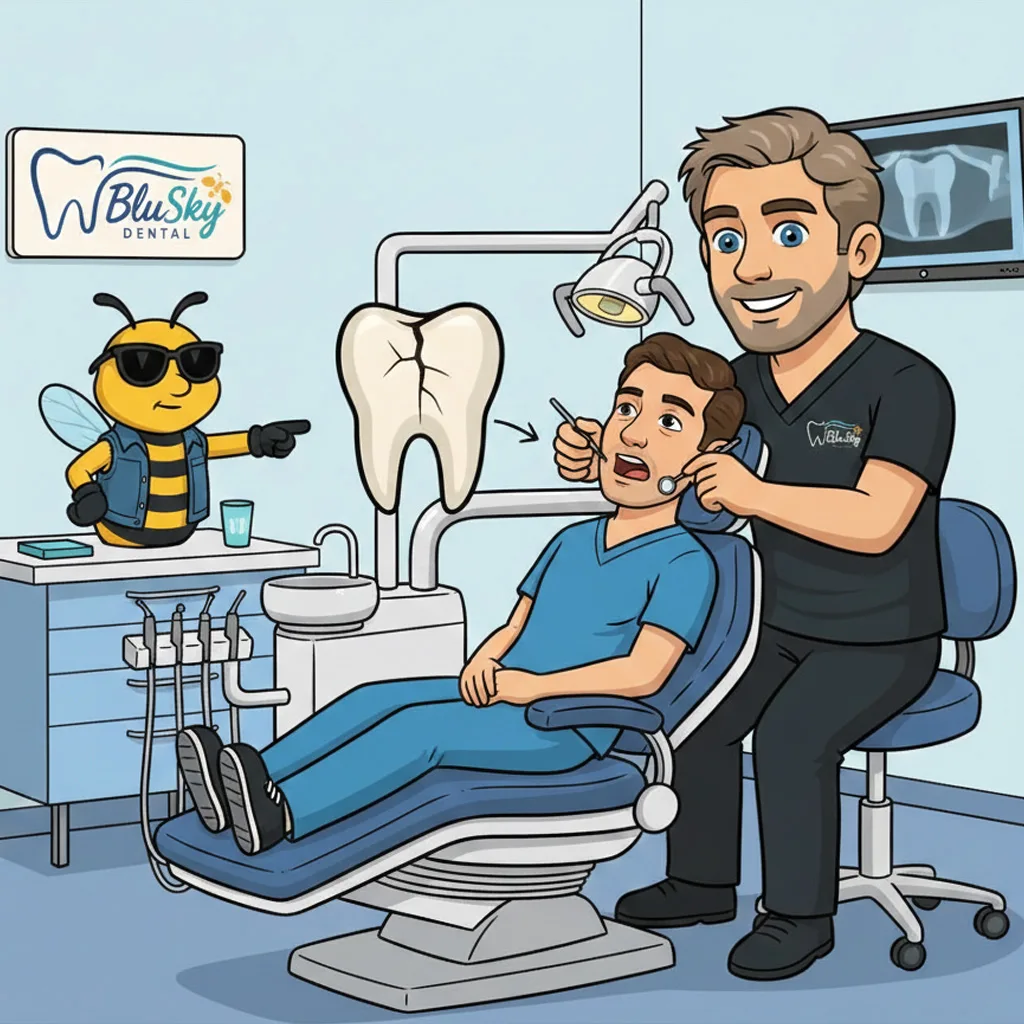
Assessing a Cracked Tooth in Ottawa
The significance of a crack depends on its location, extent and effect on the tooth's internal tissue and support. Superficial enamel lines are different from a deeper fracture, and a split tooth is different again.
The assessment should explain which findings are known and which remain uncertain. Not every visible line needs a crown, and not every painful crack can be saved.
A tooth fracture does not heal back together like a broken bone. Treatment aims to manage the consequences and support the tooth where a reasonable prognosis exists.
Treatment Follows the Findings
A restoration may protect a suitable tooth from further movement or damage. If the pulp is irreversibly inflamed or infected, root canal treatment may be part of the plan.
Some extensive fractures make a tooth unsuitable for retention. If extraction is recommended, ask why and what alternatives remain. A crown does not guarantee that a crack will stop progressing.
Our dental crown guide explains coverage and care, while tooth extraction addresses the removal decision.
While Waiting for Assessment
Avoid chewing on the affected area and stay away from hard or sticky foods that aggravate it. Do not use household adhesive or try to bind the tooth yourself.
Ask a pharmacist or clinician about suitable pain relief if needed, and follow the directions. Pain medicine does not identify or repair the fracture.
Contact the clinic promptly if pain increases, swelling develops or the tooth becomes unstable. Breathing or swallowing difficulty or rapidly spreading swelling needs emergency medical care.
Understand the Outlook
Ask how confident the clinician is about the extent of the crack and the likely outcome of treatment. Sometimes the full damage becomes clearer only during care, which can change the recommendation.
Clarify what a temporary restoration is intended to do, how it should be used and when the tooth needs review. If symptoms persist after treatment, report them rather than assuming they are unavoidable.
Reduce Repeated Stress
Mention clenching, grinding and habits such as chewing ice. Protection may be considered once the condition is assessed, but a guard is not a repair for an existing fracture.
Contact Richardson to arrange an examination and bring a note of the symptoms you have noticed.
Talk with the Richardson team
Tell us what you would like help with and ask about your next visit.
Call: (613) 829-5921
Address: 510 Richardson Ave, Ottawa, ON K2B 5H1